Commercial Water Restoration in Edgewood, IN
Commercial water loss response across Edgewood with a crew dispatched within 2 hours, day or night.
Need Commercial Water Restoration in Edgewood? Edgewood Water Restoration answers 24/7 with certified crews, fast on-site response, and documentation built for your insurance claim. Call (765) 508-0821 now.
- Service: Commercial Water Restoration for Edgewood homeowners
- Service area: Edgewood, IN and surrounding areas
- Response time: Rapid emergency dispatch for Edgewood inquiries; crews available 24/7
- Licensed and insured (License #RC21100059)
- Serving Edgewood, IN since 2018
Commercial Water Damage Restoration in Edgewood
For offices and other commercial buildings in Edgewood, we'll handle water extraction and drying at any hour.
Site Conditions
Properties near the White River carry added flood risk in heavy rain. Freeze and thaw cycles each winter can burst pipes in unheated parts of a commercial building. Your building's own drains and roof get checked on the first walkthrough with whoever manages the property.
We cover commercial properties across Edgewood, including the area around Edgewood Golf Club. We also handle commercial water losses in Alexandria, Chesterfield, Lapel and Pendleton.
Commercial Water Restoration for Edgewood Businesses
Water on a warehouse slab spreads farther than it looks, because the floor is flat by design and the square footage is large. It runs under racking, beneath pallets, and into the joint where the slab meets the dock wall. Edgewood Water Restoration brings desiccant drying and the air mover count that real square footage requires to commercial losses in Edgewood, with a crew dispatched within 2 hours of the call.
Most commercial drying happens in a building that stays partly occupied, so containment does as much work as the dehumidifiers. Edgewood Water Restoration crews build negative pressure zones, run HEPA air scrubbers and keep corridors and egress paths clear. Tenants outside the containment in your Edgewood building keep working while the wet zone dries behind plastic, and the boundary moves in as the wet area shrinks.
Water that started on an upper floor gets traced downward. Crews open access where readings justify it: above ceilings on the floor below, inside riser chases, at the slab edge, in stair and shaft walls. Every opening gets photographed and logged. Drying equipment then goes on each level the meters put inside the affected area, which is routinely more floors than the original call described.
Original image files carry the date and time each photograph was taken, and screenshots or compressed copies lose that information. Keep the originals from your own phones, since they're what a reviewer will want. Edgewood Water Restoration keeps the full size files from your Edgewood property in the job records, so a reviewer can sort every photograph by the time it was taken.
A water loss that sits overnight costs more to dry in the morning. Edgewood Water Restoration takes commercial emergency calls in Edgewood at any hour and dispatches within 2 hours. The person who answers can tell you what to shut off and what to move while the crew is on the road.
Signs You Need Commercial Water Restoration
If you notice any of these in your Edgewood building, schedule a free inspection before the issue worsens.
Drinking fountain supply line weeping inside a wall cavity
Condensate overflowing from an air handler pan onto the mechanical room floor
Resilient tile seams popping loose, with tiles rocking underfoot along a corridor
Carpet seams darkening along a corridor even though the surface feels dry
Baseboards swelling at the bottom of a wall in an office suite
Carpet tile edges curling or lifting where the adhesive underneath has released
Drips from a ceiling mounted fan coil unit or a variable air volume box
Musty odor at a return air grille that gets stronger when the HVAC runs
Water spreading from a laundry room or mailroom door into the common corridor
A damp ring spreading across a suspended ceiling tile directly below a plumbing riser
How Edgewood Water Restoration Handles Commercial Water Restoration
We follow these steps in order on every Edgewood job.
Emergency Call Intake
The person who answers asks where the water is coming from in your Edgewood building and whether the source is shut off. Access details and your engineer's contact get collected, and you hear what to move and what to leave in place for photographs.
Dispatch and Site Access
A crew dispatches to the property once the call comes in. The team sends the certificate of insurance and vendor paperwork ahead, so badging, loading dock use and freight lift access are cleared before the truck arrives.
Power and Panel Check
Before equipment goes in, your electrician deenergizes circuits that serve wet areas, and the crew checks outlets and floor boxes for moisture. Drying equipment then runs on protected circuits with the load spread across panels.
Moisture Mapping
Every affected area gets read with thermal imaging and both noninvasive and penetrating meters, floor by floor where water moved vertically. The crew photographs the source, and the readings set how much drying equipment each area needs.
Equipment Placement and Circuits
Air movers and dehumidifiers go where the drying calculation puts them, with ducting routed into plenums and shafts. The crew confirms what each circuit can carry and routes cords overhead or along walls to keep exits clear.
Commercial Water Restoration in Edgewood
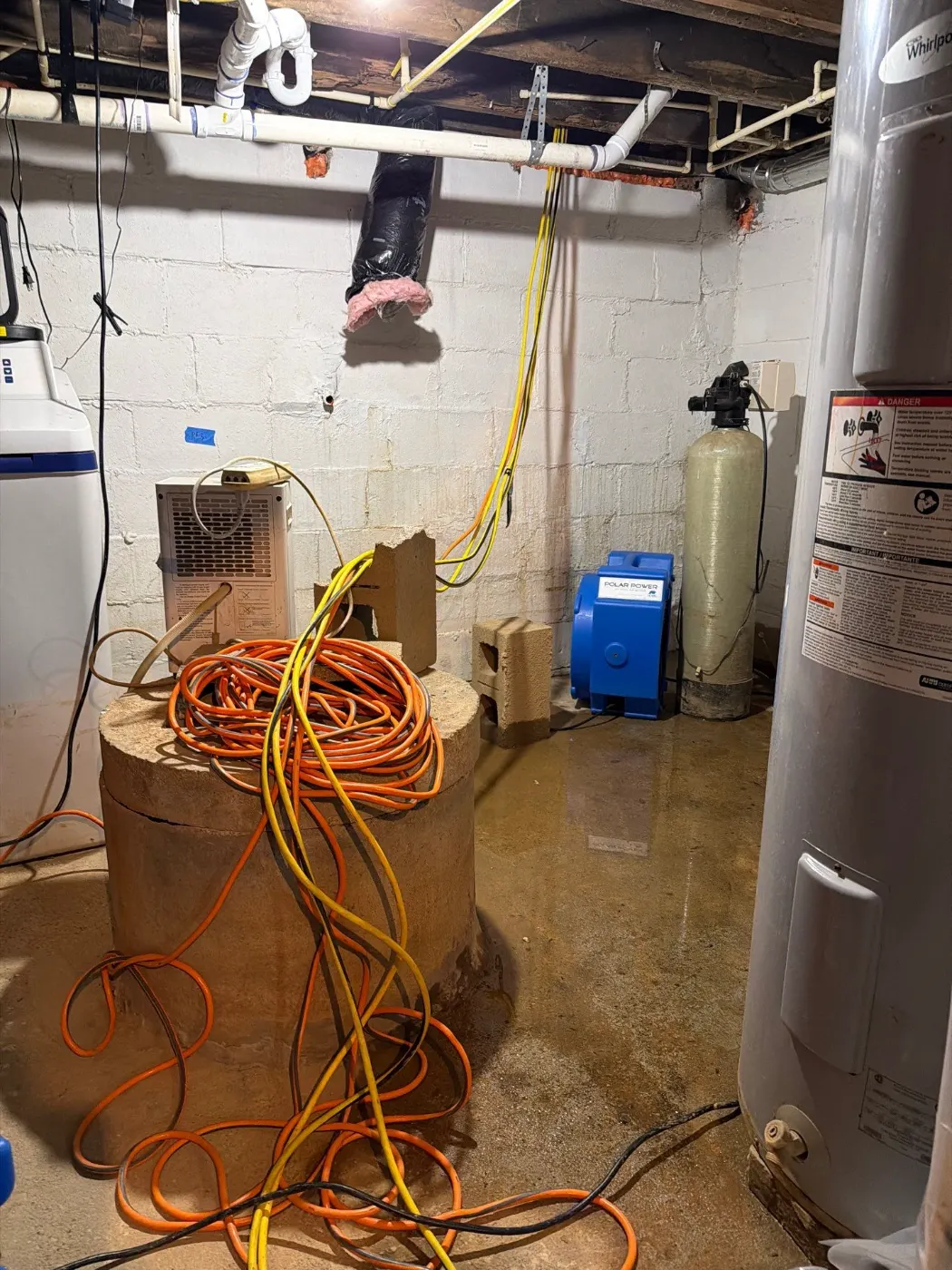
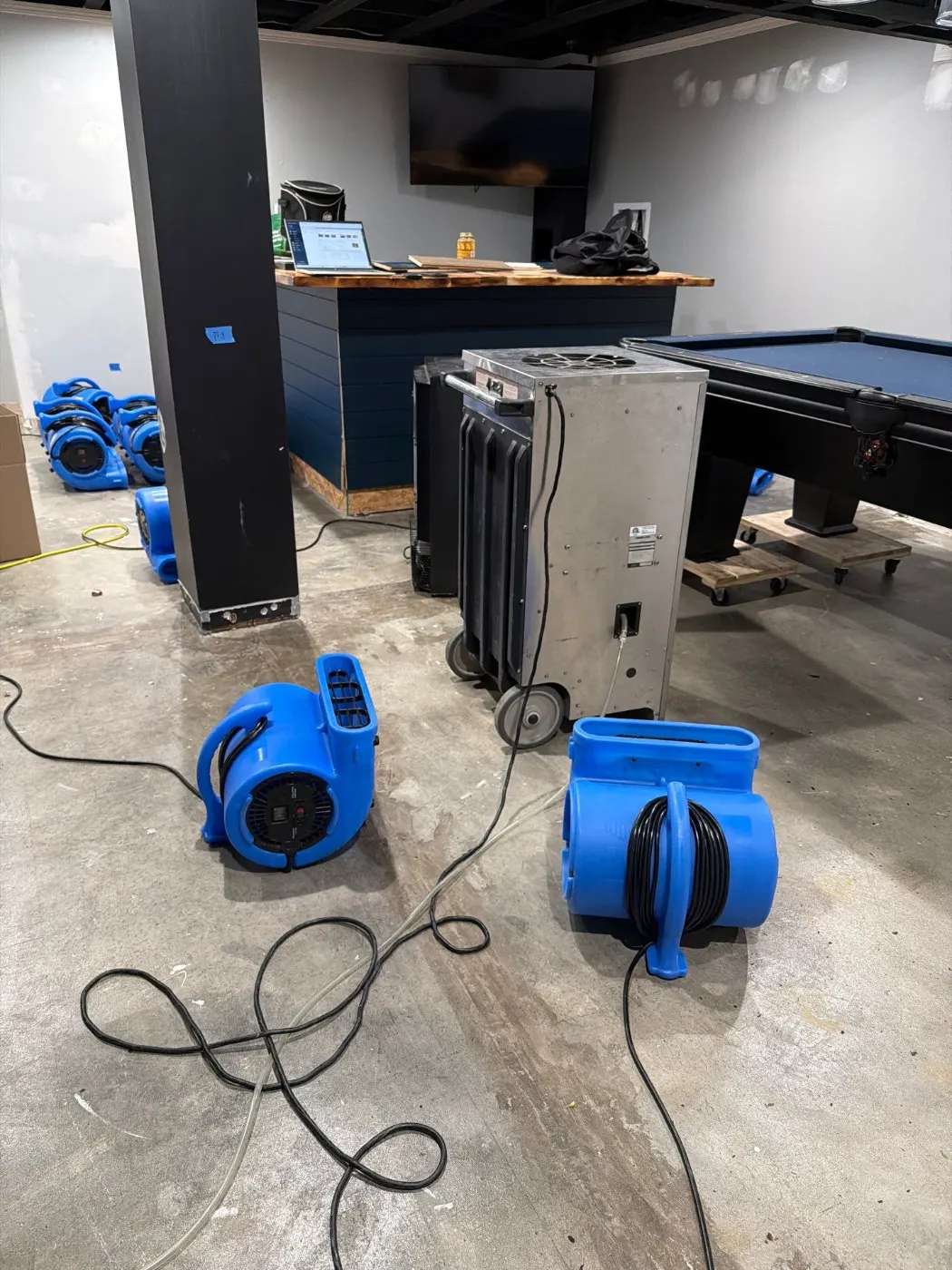
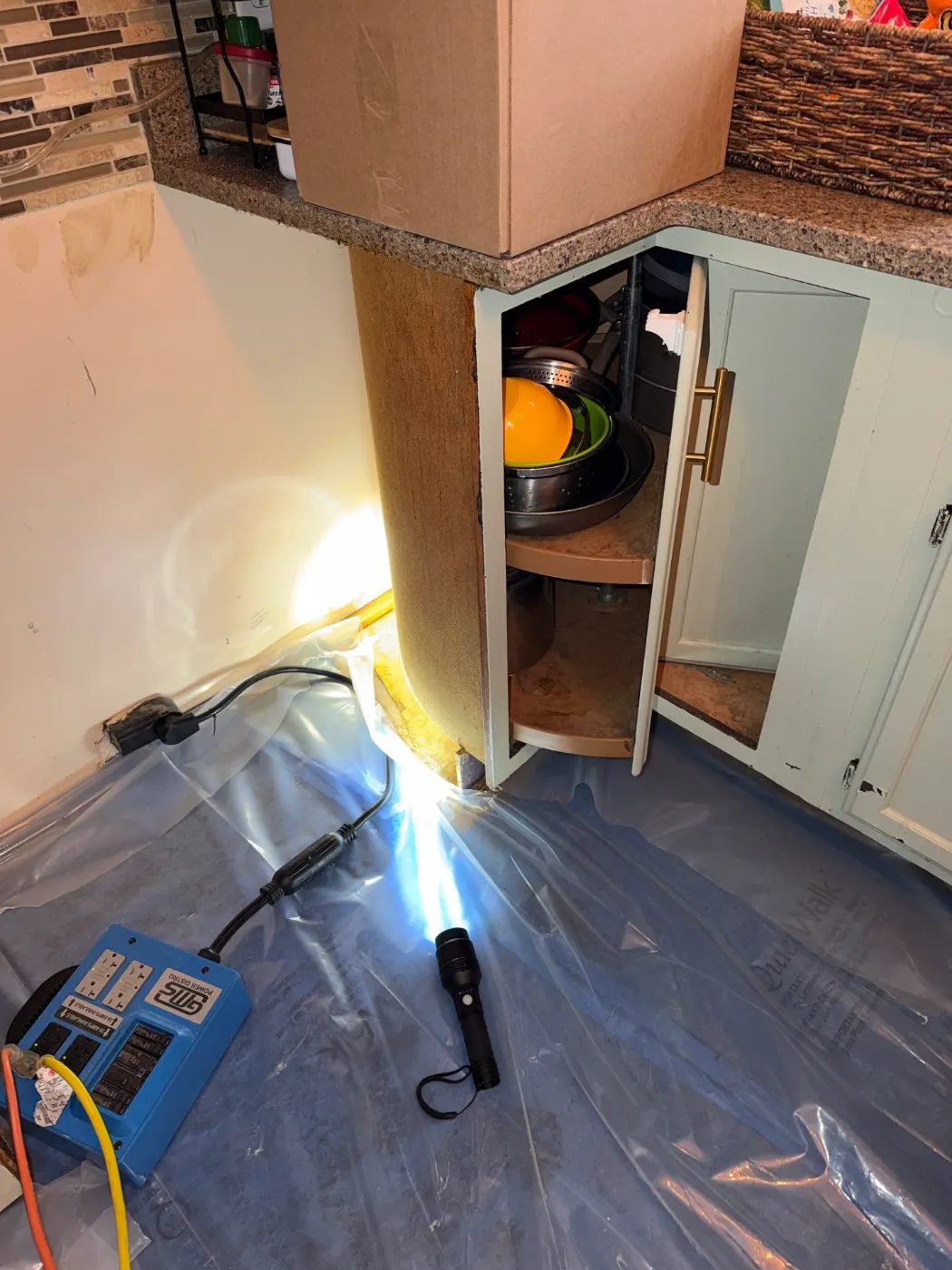
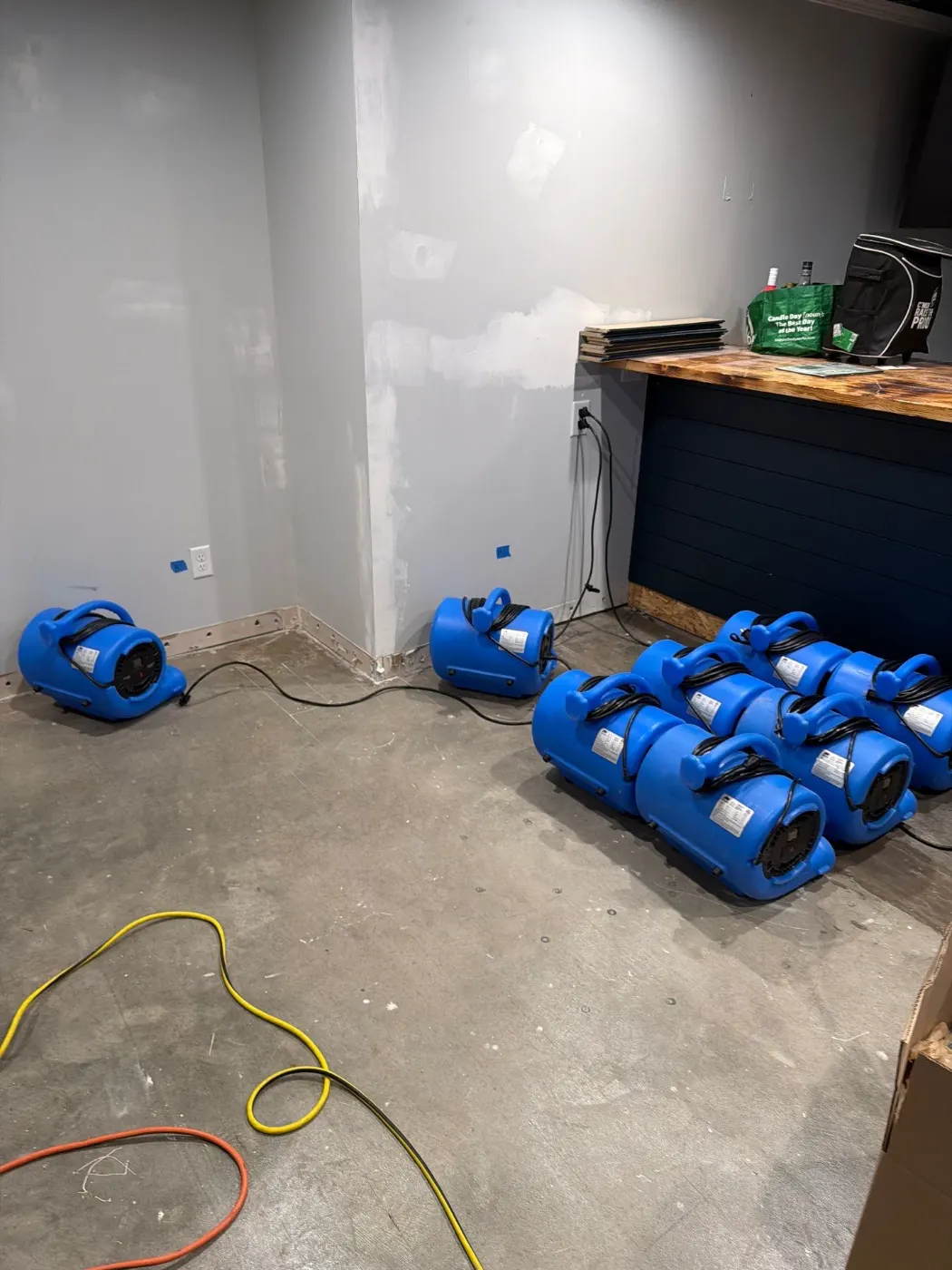
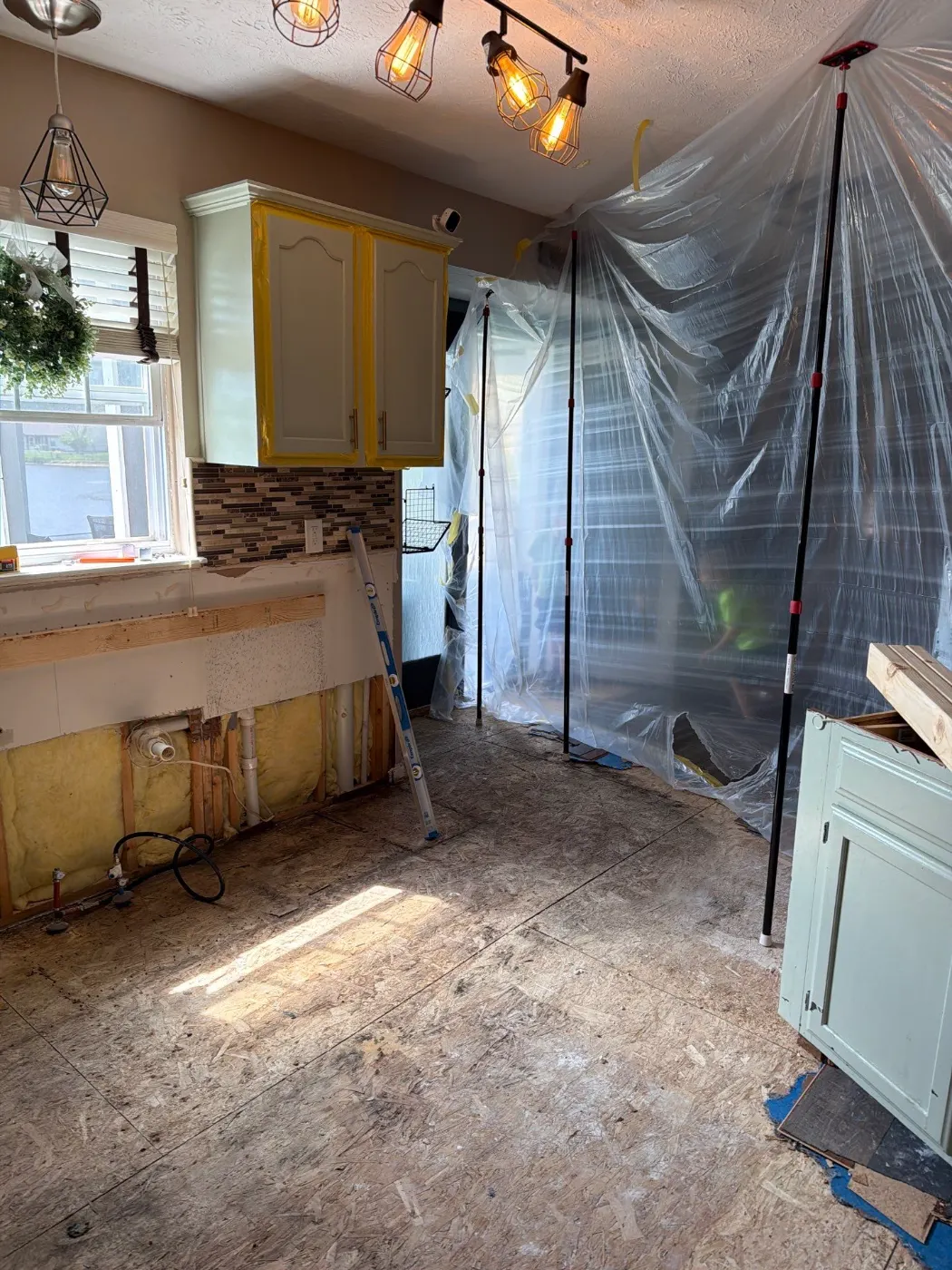
Photographs from real commercial water restoration jobs completed by our crew in Edgewood and surrounding areas.
Commercial Water Restoration FAQ
Questions Edgewood property managers ask us about commercial water restoration.
Guidance and Standards for Commercial Water Restoration
- The ANSI/IICRC S500 is the published standard for professional water damage restoration. The current edition is the Fifth Edition, 2021. IICRC S500 Standard
- EPA advises drying water damaged areas and items within 24 to 48 hours to prevent mold growth. EPA: A Brief Guide to Mold, Moisture and Your Home
Edgewood Neighborhoods We Serve
We take commercial water restoration calls in every part of Edgewood. Pick your neighborhood for local details.
Other Restoration Services in Edgewood
Edgewood Water Restoration handles the full scope of restoration work. Explore our other services below.
Water Damage Restoration in Edgewood
24/7 emergency response. IICRC certified water restoration from extraction to full dry out.
Learn more →Basement Flooding in Edgewood
Basement water emergencies handled fast. Extraction, drying, mold prevention.
Learn more →Sewage Cleanup in Edgewood
Category 3 biohazard cleanup. Full containment, decontamination, structural restoration.
Learn more →Request Commercial Water Restoration
Reach Us Directly
Our team is available 24/7 for emergencies and ready to schedule inspections during business hours.
Need Immediate Help?
For active water or mold emergencies, call us directly. We are available 24/7.