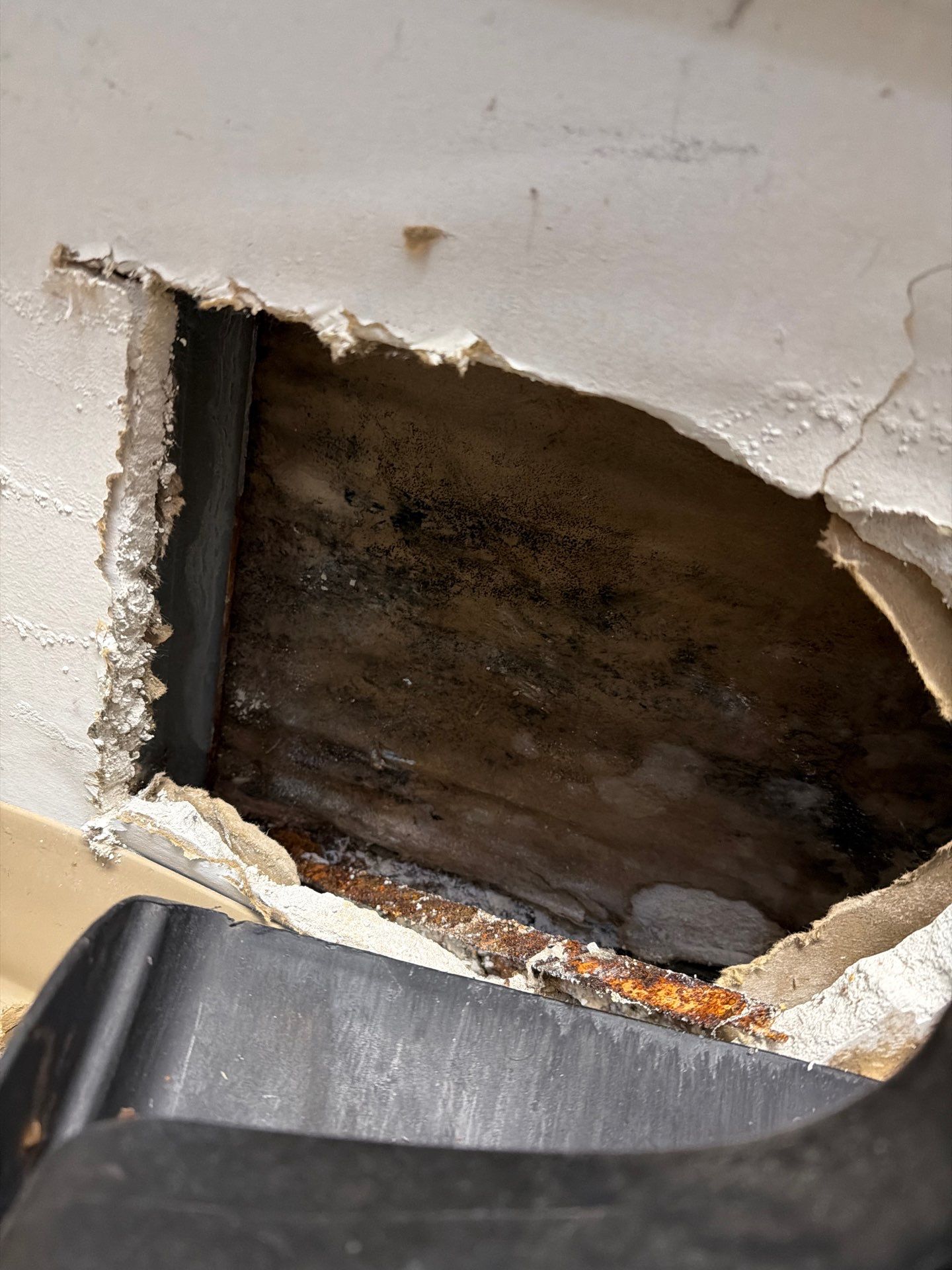
Attic leaks behave differently than burst pipes or basement floods because gravity and insulation work against you. Water enters at the roof deck, follows the path of least resistance along rafters or trusses, and pools wherever framing creates a low point. Fiberglass batts soak it up like a sponge and hold it against the drywall ceiling below, which is why the visible stain almost never appears directly under the actual leak. We have opened ceilings in Carmel and Greenwood where the homeowner was certain the leak was above the kitchen, only to track the entry point twelve feet away near a poorly sealed plumbing vent. Finding the source is step one, and it requires moisture meters, thermal imaging, and someone willing to crawl the ridge in July heat.
The category of water matters enormously for how we treat the space. Rainwater entering through a clean roof penetration starts as Category 1, meaning it is sanitary at the source. The problem is that attics are rarely sanitary destinations. Bird droppings, rodent nesting material, old cellulose insulation treated with boric acid, and decades of dust turn that clean water into Category 2 grey water within hours. If the leak has been active for more than 48 to 72 hours, microbial growth on the wood sheathing pushes it toward Category 3 territory, and the scope of work expands accordingly. This is why a same-week response matters, and why our same day water damage service exists for situations exactly like this one.
What a Proper Attic Restoration Actually Involves
When our crew arrives at your Edgewood home, the first thirty minutes are diagnostic. We map moisture readings across the affected area, identify the entry point, and tarp the roof if active weather is in the forecast. We do not start tearing out materials until we know the boundaries of the damage, because guessing leads to either doing too much or, worse, leaving wet material buried under new insulation. Once the scope is documented for your insurance carrier with photos and meter readings, the removal phase begins. Saturated fiberglass comes out in contractor bags. Cellulose, which clumps and holds moisture far longer, almost always requires full removal in the affected bays. Vermiculite, which you might find in homes built before 1990, gets tested for asbestos before anyone touches it.
Structural drying in an attic is its own challenge. The space is hot, poorly ventilated in summer, and freezing in winter, all of which affect how fast wood sheathing and framing release moisture. We stage commercial air movers and dehumidifiers strategically, monitor moisture content in the rafters daily, and do not declare the space dry until readings match the unaffected baseline. For most single-leak situations covering 100 to 300 square feet of attic, drying runs three to five days. Larger losses or homes with spray foam insulation, which traps moisture against the deck, can run a week or longer. If the drywall ceiling below has sagged, bubbled, or stained through, that becomes a separate repair scope. You can read more about how we handle that in our guide on ceiling water damage and leak repair.
One detail homeowners rarely anticipate is how the recessed lighting, bath fan housings, and HVAC ductwork in the ceiling plane below the attic interact with a leak. Water tracks along the top of a duct run and emerges six feet from where it entered. It pools in the metal can of a recessed light and shorts the fixture, sometimes weeks after the original event. We test every electrical penetration in the affected zone with a non-contact moisture meter and pull fixture trims when readings warrant it. Skipping that step is how homeowners end up with a flickering kitchen light three months after they thought the job was done, and how insurance reopens a closed claim under less favorable terms.
Cost, Insurance, and the Mold Question Everyone Asks
Realistic pricing in the Edgewood market for attic water damage restoration falls between $1,800 and $6,500 for most residential losses, with the spread driven by how much insulation needs replacement, how much framing requires antimicrobial treatment, and whether the ceiling below survived. Roof repair itself is usually a separate line item handled by a roofing contractor, though we coordinate the sequencing so your home is not exposed between mitigation and permanent repair. Sudden and accidental roof leaks are typically covered by homeowners insurance, while long-term seepage from deferred maintenance is generally excluded. We document everything in language adjusters recognize, including IICRC S500 standards, psychrometric readings, and itemized scope sheets, so your claim moves faster.
Mold is the question every homeowner asks within the first ten minutes of the call, and the honest answer is that visible mold growth on wood sheathing can begin within 48 to 72 hours of sustained moisture exposure. If your leak has been active longer than that, expect us to find some level of microbial activity, and expect the remediation protocol to include HEPA air scrubbing, antimicrobial application, and in some cases containment barriers to protect the rest of the home. Our team handles this in-house, and you can dig deeper into the process through our resource on mold after water damage. The worst thing you can do is close the attic hatch and hope it dries on its own. It will not, and the bill in six months will be three times what it would have been today.
Storm-driven attic leaks deserve special mention because they often arrive alongside other damage, lifted shingles, damaged flashing, gutter failures, or wind-driven rain through ridge vents. If a recent storm started this for you, our storm damage restoration team can coordinate the full scope so you are not chasing three different contractors. Edgewood weather patterns, especially the spring and late-summer storm corridors that cut across central Indiana, produce a predictable surge of these calls every year, and we staff accordingly.
Preventing the Next Leak Before It Starts
Once the restoration is complete, the conversation we have with every Edgewood Water Restoration client is about prevention. Roof penetrations are the usual suspects: plumbing vent boots crack with UV exposure after about ten years, step flashing around chimneys loosens as mortar joints fail, and ice dams along the eaves push meltwater backward under shingles every February. Walking the attic with a flashlight twice a year, once in late fall and once after the spring thaw, catches the small stains and rust rings around nails before they become emergencies. We tell homeowners to look for daylight at the ridge, dark streaks on the underside of the sheathing, and any spot where insulation appears compressed or discolored. Catching a leak at the stain stage rather than the drip stage is the difference between a $400 roofing repair and a five-figure restoration project, and it is the single most valuable habit we can pass along.