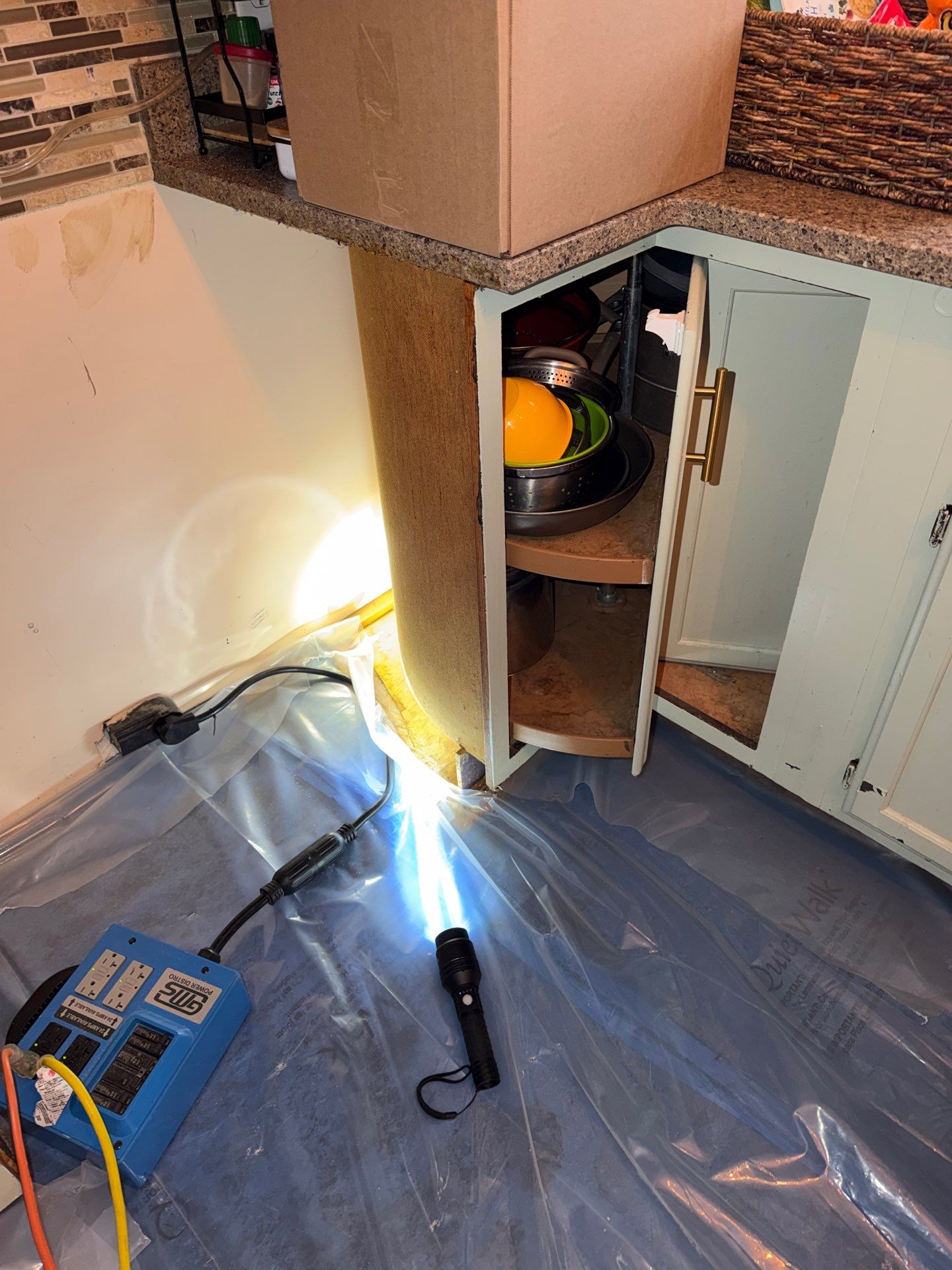
Problem: The Water Is Still Spreading Under Your Cabinets
Dishwashers sit recessed into a cabinet bay with almost no lip to contain a leak. When the unit overflows or a hose fails, water travels in three directions at once: forward onto the kitchen floor, backward into the wall cavity behind the unit, and downward through the cabinet floor into the subfloor. The visible puddle is usually the smallest part of the problem.
Solution: Stop the Source and Pull the Unit Out
Shut off the dishwasher at the breaker panel first, then close the hot water supply valve under the sink. The valve is usually a small lever or knob on the line that feeds the dishwasher. Open the door carefully because trapped wash water will spill out. Remove the lower kickplate (two screws, sometimes four) so you can see whether water has pooled under the tub. Towel up what you can reach, but understand that the water you cannot see is the water that causes the damage. For a deeper look at how plumbing failures behave in finished spaces, our breakdown of plumbing leak water damage covers the same hidden path problem in detail.
Problem: The Flooring Looks Fine but the Subfloor Is Saturated
Tile, vinyl plank, and engineered hardwood all hide damage well in the first 24 hours. The surface dries with a towel and a fan, and the homeowner assumes the event is over. Three weeks later the grout darkens, a plank cups, or a musty smell drifts up from the cabinet. The water was never gone. It moved into the plywood subfloor, the cabinet toe kick, and the wall plate behind the dishwasher.
Solution: Measure Before You Decide
Professional moisture meters and thermal cameras read what your eyes cannot. We map the wet area, document moisture content in the subfloor, and decide whether the flooring can be dried in place or whether sections need to come up. The difference matters financially. Drying in place with air movers and dehumidifiers usually runs a fraction of the cost of tear out and replacement. In Edgewood kitchens with engineered hardwood, we often find moisture readings above 20 percent in planks that still look and feel dry on the surface. Catching that early is the difference between a three day dry out and a six week reconstruction project.
Problem: The Cabinet Itself Is Wicking Water Upward
Particleboard and MDF cabinet boxes act like a sponge. Once the bottom edge of a sink base or dishwasher adjacent cabinet sits in water for more than a few hours, the material swells, the laminate face starts to bubble, and the structural strength drops fast. Soft close hinges loosen because the screw holes lose their grip. By the time you notice the front kick panel warping, the back panel may already be falling apart.
Solution: Isolate and Dry the Cabinet Bay
The cabinets do not always have to come out. If we catch the saturation early, we can drill discreet ventilation holes inside the toe kick area, pull the bottom shelf, and direct warm dry air through the cavity for 48 to 72 hours. Cabinet drying mats and injection drying systems push air behind the boxes without removing them from the wall. When the Edgewood Water Restoration crew documents readings that come back to dry standard, the cabinets stay. When they do not, we coordinate with a millwork shop so replacement panels match the existing finish.
Problem: Mold Has a 48 hour Head Start
The wall cavity behind a dishwasher is dark, warm, and now wet. That is the exact environment mold needs. Spores that were dormant in the drywall paper begin colonizing within two days, sometimes faster when the kitchen is sealed up and the HVAC is running.
Solution: Dry Aggressively in the First 72 Hours
The fix is volume and time. Commercial air movers, low grain refrigerant dehumidifiers, and targeted cavity drying through small access holes pull moisture out before colonization takes hold. Here is what an effective first response looks like:
- Extract any standing water with truck mounted or portable equipment within hours of arrival.
- Set air movers around the cabinet bay and across affected flooring, one per 50 to 60 square feet.
- Place a dehumidifier sized to the room and monitor grain depression daily until materials read at dry standard.
Our crews typically arrive within 2 hours of your call. If the damage extends into adjacent rooms or down through a ceiling below, the response model used for whole home water damage restoration applies here as well.
Problem: This Will Happen Again Without Prevention
The same dishwasher, the same supply line, the same drain hose. If nothing changes, the next flood is a matter of when.
Solution: Three Habits That Prevent the Next Flood
You do not need a smart home to prevent dishwasher floods. You need to inspect, replace, and contain.
- Replace the rubber supply hose with a stainless steel braided line every 5 to 7 years, or sooner if you see kinks, bulges, or corrosion at the fittings.
- Check the drain hose loop under the sink monthly. It should rise above the disposal inlet to prevent backflow.
- Install a simple water alarm or leak sensor inside the cabinet bay. They cost less than $20 and will wake you up before a slow leak becomes a flood.
If you have already experienced multiple appliance leaks, the deeper diagnostic work in our guide to hidden water damage signs is worth a read. Small failures often share a common cause, and finding it once saves you from repeating the cleanup.
Problem: Your Insurance Claim Needs Documentation You Do Not Have
Homeowners insurance generally covers sudden and accidental appliance discharge, but adjusters want proof of cause, scope, and mitigation effort. A photo of a wet floor is not enough. Without moisture maps, equipment logs, and a clear cause of loss narrative, claims get delayed or partially denied.
Solution: Document While You Mitigate
Edgewood Water Restoration provides daily moisture readings, equipment placement diagrams, and photo logs that adjusters recognize. Take your own photos before anything is moved, save the failed supply line or hose as evidence, and write down the time the leak was discovered. These small steps protect the claim and shorten the approval cycle.